

IFSI – IFAS – Training Institute for Nurses And Pole of Higher Education
Ambilly |
France –
2019
Client
GHT Léman Mont Blanc
Start of construction
04 | 2023
Size
4 384 m²
Construction budget
14 M€
Competition winner
2019
Completion
10 | 2026
Located at the French-Swiss border, the new Nursing Training Institute (IFSI) forms part of the Grand Forma higher education campus within the emerging Étoile Annemasse–Genève district. This major urban development transforms former railway and industrial sites into a vibrant mixed-use neighbourhood combining housing, workplaces, educational facilities and public spaces. Connected to Geneva by the Léman Express, the district establishes a new metropolitan centre and strengthens the relationship between the two sides of the border.
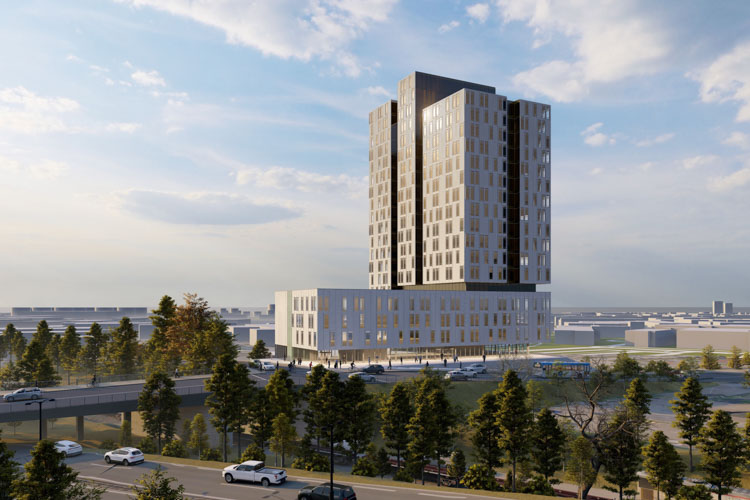
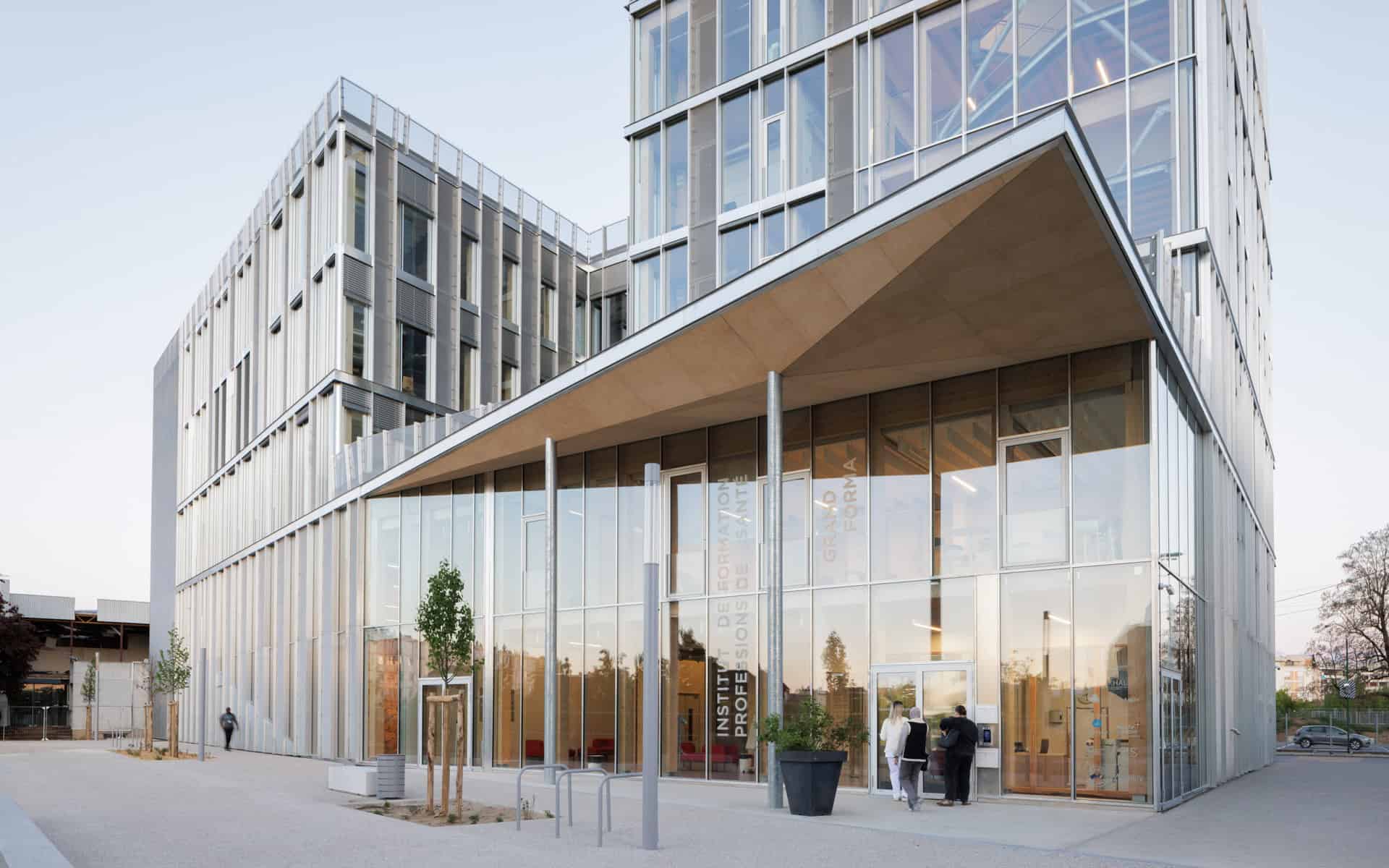
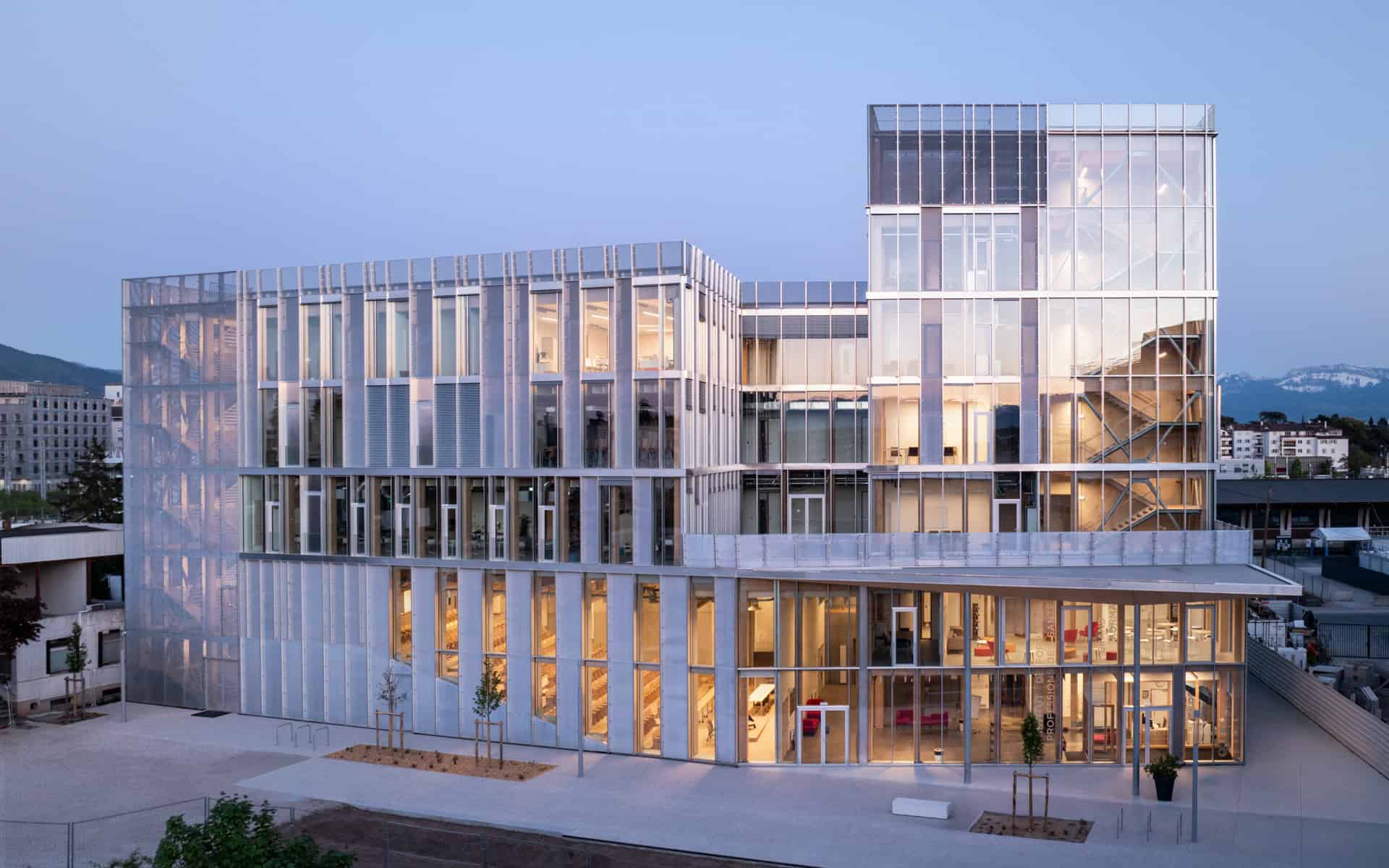
Occupying a central position within the campus, the institute contributes to the identity of the new neighbourhood. Surrounded by public spaces and visible from all sides, the building establishes a clear urban presence while maintaining an open relationship with its surroundings. A recessed forecourt marks the main entrance and extends the public realm into the ground-floor foyer. The transparent ground level accommodates an auditorium, communal areas and spaces for informal exchange, creating a welcoming environment for students and visitors.
The upper floors accommodate teaching rooms, computer and simulation facilities, and administrative offices. From the second floor upwards, the building gradually steps back, creating generous outdoor terraces accessible to students. The composition distinguishes two interconnected volumes of different heights, responding to the scale of the surrounding urban fabric while establishing a distinctive silhouette within the new district.
The architectural expression is characterised by a restrained material palette and a carefully articulated façade. Vertical panels of raw aluminium expanded metal give the building a subtle rhythm and depth. While the ground floor remains largely transparent, the upper levels combine full-height glazing with adjustable solar shading. The appearance of the building changes throughout the day according to daylight conditions and the position of the shading elements. Under strong sunlight, the panels create a continuous translucent metallic veil, filtering natural light and giving the volume a calm, unified expression. When opened, the façade reveals the depth of the interior spaces and strengthens the visual connection between learning environments and the surrounding city.
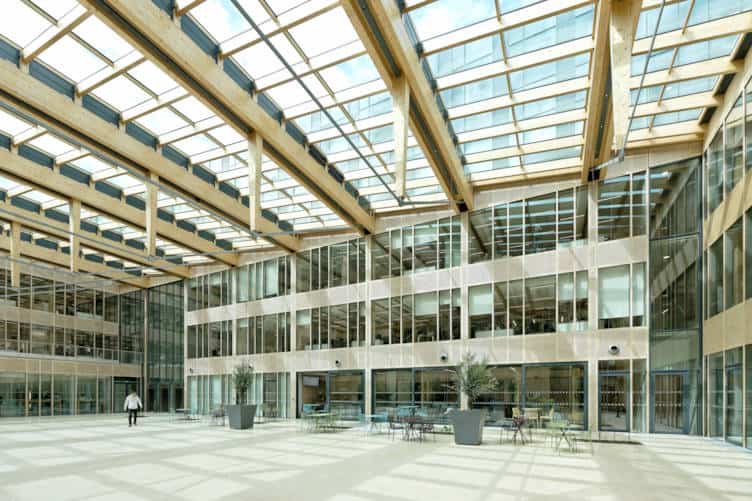
The building’s structural system is deliberately expressed through exposed timber construction. Timber columns, beams and cross-laminated timber floors define the interior spaces, creating a warm and welcoming atmosphere while contributing to a resource-efficient, low-carbon approach. The use of locally sourced French timber further supports the project’s environmental ambitions.
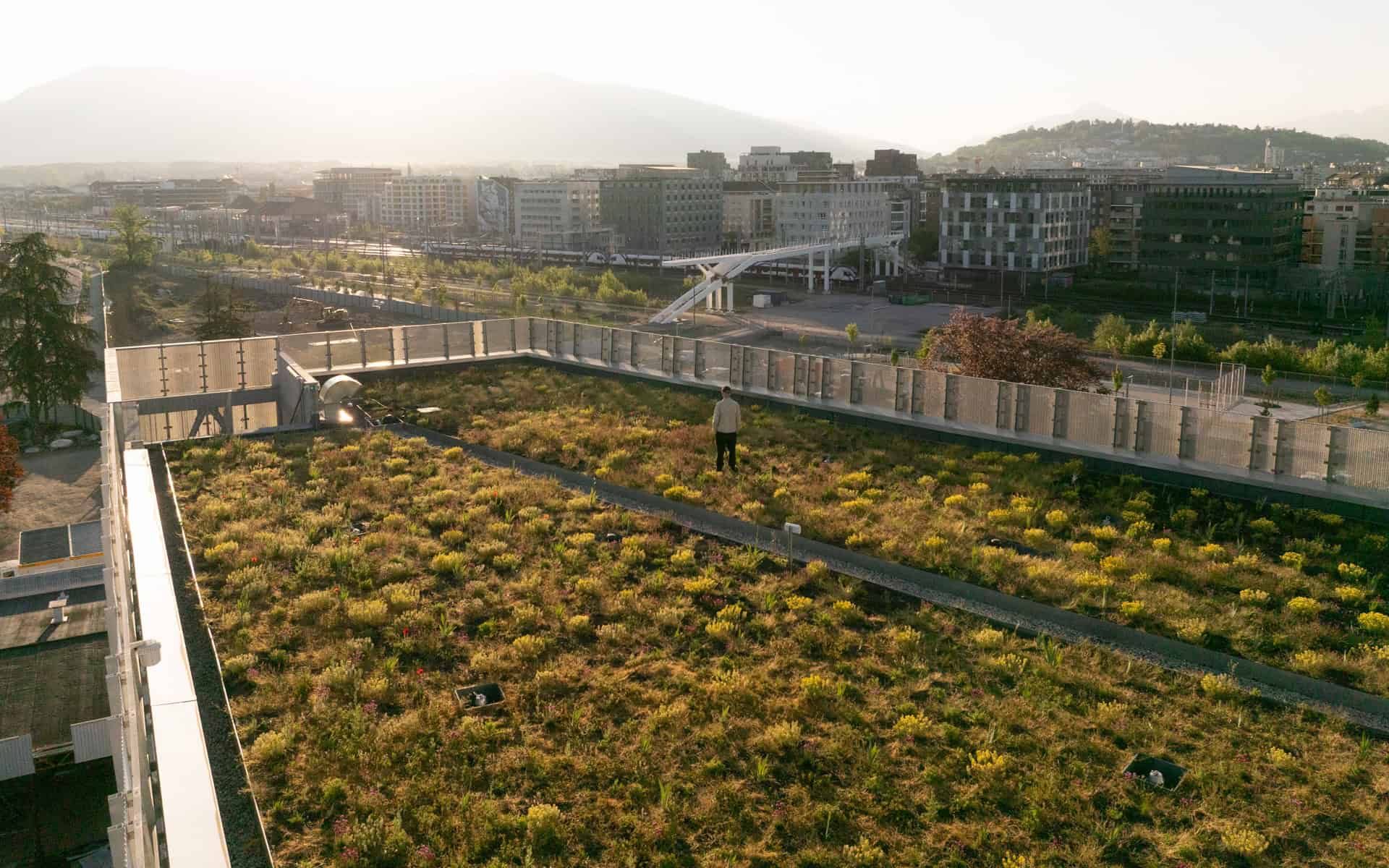
The terraces and roofs are conceived as a fifth façade, integrating planted surfaces, photovoltaic panels and technical installations into a coherent architectural composition. Green roofs contribute to biodiversity and improve the local microclimate, while technical equipment is discreetly enclosed behind expanded metal screens, maintaining the clarity of the building’s silhouette.
Combining a rational timber structure, adaptable façades and accessible outdoor spaces, the Nursing Training Institute offers a contemporary learning environment that places openness, flexibility and environmental responsibility at the heart of its architecture. The project contributes to the transformation of the Étoile district, establishing a new connection between education, public space and urban life.
Architect: Dietmar Feichtinger Architectes
General engineer: AR-C
MEP & energy engineering: MCI THERMIQUE
Acoustic engineering: ALTIA
Quantity surveyor: TEM PARTNERS
DET & OPC consultant: Vincent Rocques Architecte
Photographer: ©Moritz Orgler
HQE – Sustainability
RT 2020 –20% | HQE approach aiming for BBC label | U-value < 70% × U–value max | Biosourced materials | Wooden structure